Micromanagement: What It Is, How to Spot It, and How to Make Sure You’re Not That Boss
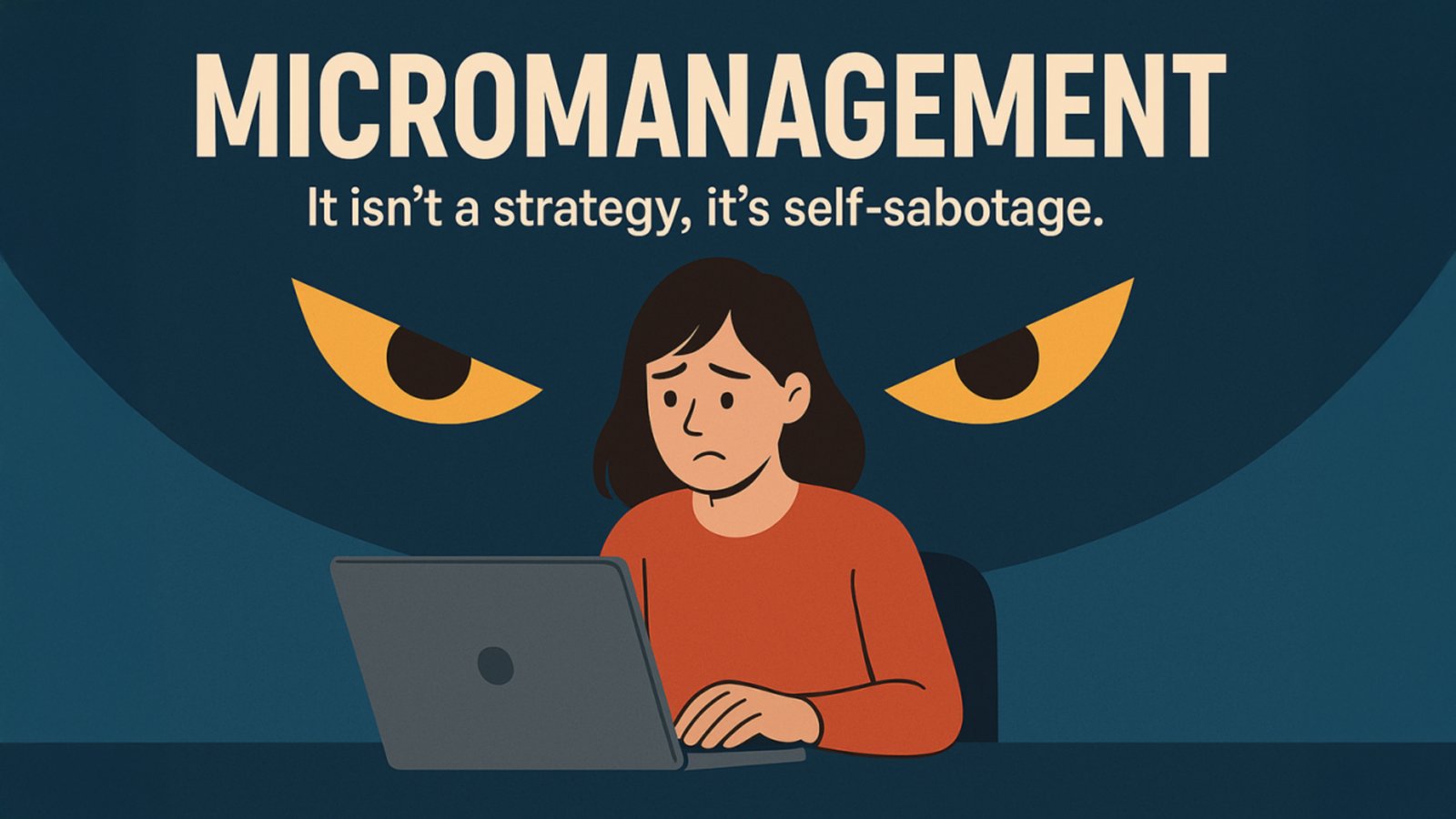
Micromanagement replaces trust with control. It slows delivery, reduces ownership, and pushes strong people out.
Most micromanagers do not wake up trying to make work harder. The behavior usually comes from pressure, perfectionism, or anxiety about outcomes. The impact is still the same. People stop thinking independently and start waiting for approval.
What micromanagement is
Micromanagement is excessive oversight that limits autonomy. It shows up when a leader monitors work too closely, intervenes too often, or refuses to delegate, even when the team is capable. Psychology Today describes the experience as being treated like a child, which is a direct hit to trust and motivation. [3]
Healthy management sets direction, clarifies constraints, and checks progress at a reasonable cadence. Micromanagement focuses on controlling every step, even when the outputs are clear.
How to spot it
- You must be copied on every email or message.
- You ask for constant updates, even on low-risk work.
- You rewrite work instead of coaching improvements.
- You require approval for routine decisions.
- You focus on the exact process, not the outcome.
One survey summarized by Redline Group reports that 59% of people have experienced micromanagement, and many said it crushed morale. A meaningful portion left roles to escape it. [4]
What it does to teams
Micromanagement creates hidden work. People spend time reporting instead of producing. Decision latency grows because everything funnels through one person. You also lose the benefits of specialization, because experts stop being allowed to be experts.
It also raises stress. Unrubble summarizes research and common outcomes like anxiety, poor sleep, and burnout when people feel constantly monitored. [5]
From a systems view, micromanagement does not scale. It creates a single point of failure in the org chart.
How to avoid being that boss
- Set clear outcomes, constraints, and quality bars, then step back. Harvard Business Review recommends helping in a way that supports autonomy, not control. [1]
- Coach instead of rewrite. Give feedback, explain the why, and let the person own the next iteration.
- Create a predictable check-in cadence. A scheduled rhythm works better than surprise status pings. [6]
- Use questions that unblock. Try, “What are you stuck on,” or “What decision do you need,” instead of, “Show me every step.”
- Reward prevention work. Celebrate automation, runbooks, and clean handoffs, not only last-minute saves.
If you work for a micromanager
- Send short, proactive updates. It reduces anxiety and builds trust over time.
- Clarify ownership. Ask which decisions you can make without approval.
- Document outcomes. Keep a record of results and what you learned.
- Escalate if it becomes toxic. Use HR or a skip-level manager if boundaries are not respected.
Fox Business suggests building trust through consistency, then asserting independence in a professional way once expectations are clear. [2]
References
- Cynthia M. Fisher, Teresa M. Amabile, and Julianne Pillemer, “How to Help (Without Micromanaging),” Harvard Business Review, 2021. hbr.org
- “4 Ways to Handle a Micromanaging Boss,” Fox Business, 2018. foxbusiness.com
- Victor Lipman, “Why Micromanagement Is So Harmful,” Psychology Today, 2024. psychologytoday.com
- “The Damaging Impact of Micromanagement and How to End It,” Redline Group, 2023. redlinegroup.com
- “The Negative Effects of Micromanagement,” Unrubble, 2024. unrubble.com
- “CEOs Are More Hands-On, but Fear Micromanaging,” The Wall Street Journal, 2009. wsj.com
- “Micromanagement Is Killing Innovation: The Leadership Shift Teams Need,” Forbes, 2025. forbes.com